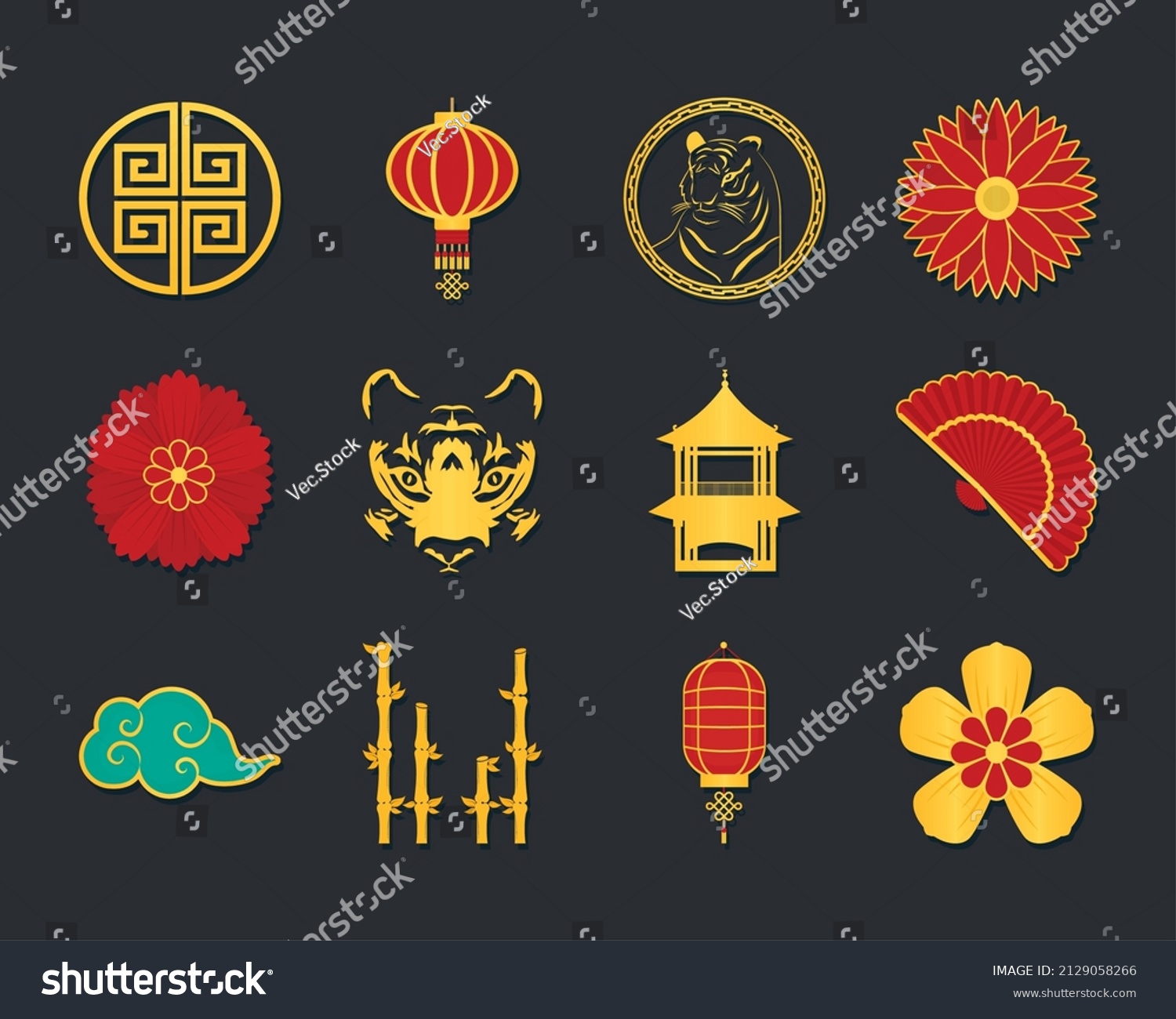
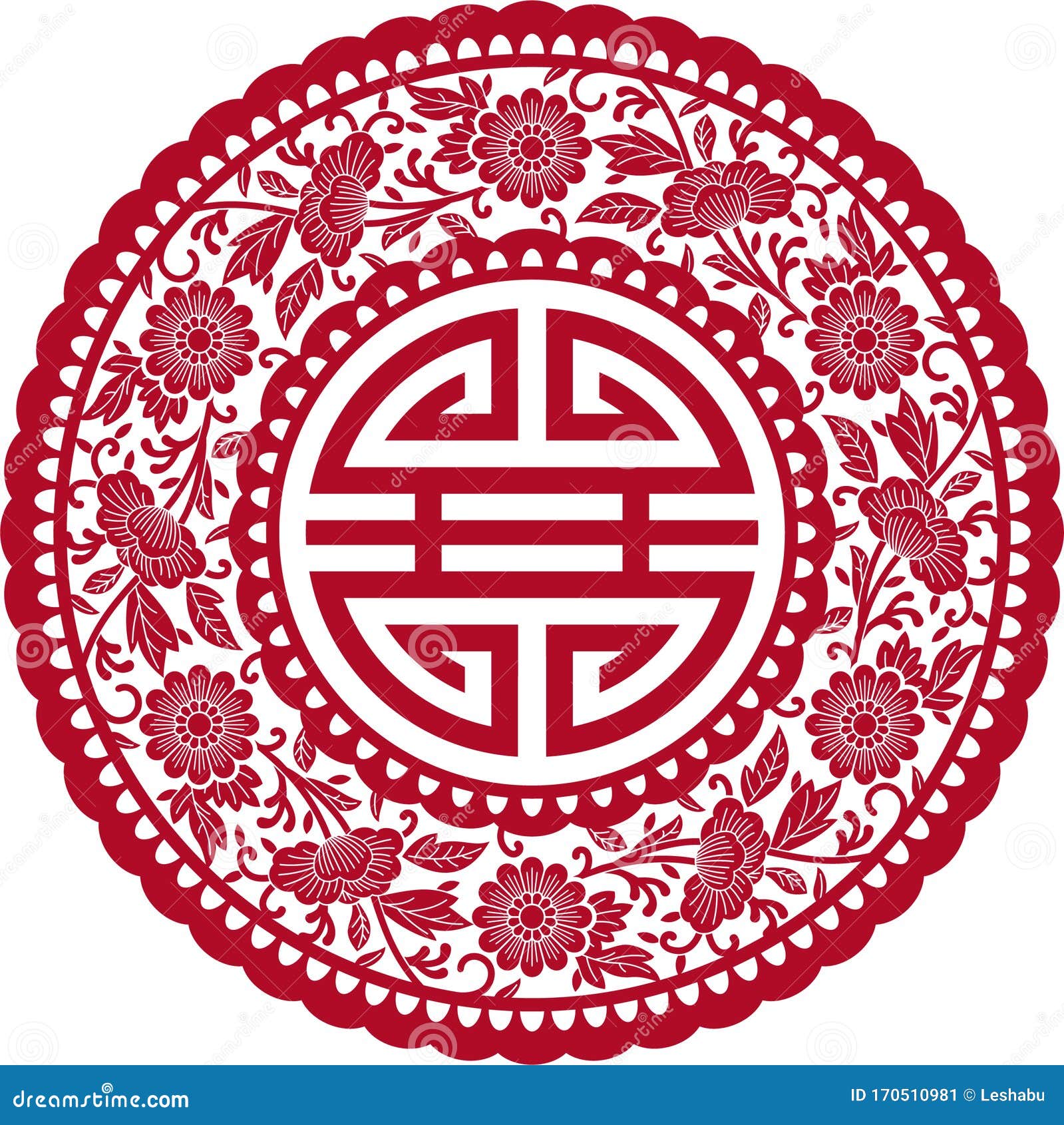
A list of Chinese symbols, designs, and art motifs, including decorative ornaments, patterns, auspicious symbols, and iconography elements, used in Chinese visual arts, sorted in different theme categories. Chinese symbols and motifs are more than decorative designs as they also hold symbolic but hidden meanings which have been used and understood by the Chinese people for thousand of years; they often influenced by nature, which include the fauna, the flora, landscape, and clouds. Chinese symbols often have auspicious meanings associated to them, such as good fortune, happiness, and also represent what would be considered as human virtues, such as filial piety, loyalty, and wisdom, and can even convey the desires or wishes of the Chinese people to experience the good things in life. There are also special symbols in Chinese arts, such as the qilin, and the Chinese dragon. According to Chinese beliefs, being surrounding by objects which are decorated with such auspicious symbols and motifs was and continues to be believed to increase the likelihood that those wishes would be fulfilled even in present-day. Chinese symbols and motifs are often found in Chinese decorative arts, porcelain ware, clothing, and personal adornments.
Categorized sets or collections
- Chinese zodiac
- Eight Auspicious pattern (Bajixiang 八吉祥): The Eight Auspicious symbols of Buddhism
- Eight treasures (Babao 八寶)/ Eight precious things
- Flowers of the Four Seasons
- Four gentlemen
- Five Poisons
- Four symbols
- Twelve ornaments
Natural landscape and cosmology
Clouds, sun, stars, and moon
Waves and sea
Animals
Mammals
Birds
Birds were symbols of literary refinement of the scholars with ability to fly towards the Heaven.
Fish
Insects
Imaginary animals
Chimeral animals
Bird-like creatures
Animal-like creatures
Composite
Plants, flowers, and trees
Flowers
Trees and plants
Composite
Fruits, vegetables, kernels, mushroom, and seeds
Fruits
Mushroom
Inanimate objects
Chinese characters
Taoist religion
Taoist deities and immortals
In present day China, the Sanxing and other Chinese folk deities continue to be perceived as powerful carrier of good fortune. The Queen Mother of the West, Xi Wangmu, who is often figured in Chinese stories, is associated with symbols of longevity in Chinese arts as the peaches of immortality are believed to grow in her celestial peach orchard according to folklore stories.
Taoist symbols
Buddhism religion
Buddhist entities
Borders/ meander, and repeated patterns
Related concepts
- Five blessings
- Chinese numerology
- Five colours
- Yansheng coins
See also
- Chinese ornamental gold silk
- Chinese embroidery
- Chinese auspicious ornaments in textile and clothing
Notes
References
Bibliography
- Eberhard, Wolfram (1986). A dictionary of Chinese symbols : hidden symbols in Chinese life and thought. London: Routledge & Kegan Paul. ISBN 978-0-203-03877-2. OCLC 826514710.
- Ren, Liqi (2013). Traditional Chinese visual design elements: their applicability in contemporary Chinese design (Master of Science in Design thesis). Arizona State University.
- Welch, Patricia Bjaaland (2012). Chinese art : a guide to motifs and visual imagery. Boston, US: Tuttle Publishing. ISBN 978-1-4629-0689-5. OCLC 893707208.
- Williams, Charles (2006). Chinese symbolism and art motifs : a comprehensive handbook on symbolism in Chinese art through the ages. New York: Tuttle Pub. ISBN 978-1-4629-0314-6. OCLC 782879753.